The global demand for healthy, plant-based, and gluten-free snacks is at an all-time high. At the forefront of this superfood revolution is Makhana (Fox Nuts). For international snack food brands, wholesalers, and supermarket chains looking to capitalize on this trend, sourcing authentic, premium Makhana directly from India is the most profitable strategy.
However, navigating cross-border agricultural trade requires a partner who understands international compliance, quality grading, and seamless logistics. As a premier exporter based in Katihar, Bihar—the very heartland of the Mithila Makhana GI Tag—PLS Agro Foods has created this definitive guide for B2B buyers importing Makhana in 2026.
1. Understanding Export-Quality Grading (The "Suta" System) International clients often struggle with local grading terminology. In Bihar, Makhana is graded by its diameter using the traditional "Suta" measurement (1 Suta ≈ 3.17 mm). To ensure you are sourcing the right product for your market, understand these tiers:
-
4 to 5 Suta (Standard/Premium): Ideal for bulk roasting, flavored snack manufacturing, and makhana powder/flour production.
-
6 to 7+ Suta (Jumbo/Super Jumbo): The highly sought-after export grade. These visually impressive, ultra-crunchy, handpicked kernels are perfect for premium retail packaging and luxury organic brands in the US, Europe, and UAE markets.
2. Critical Quality Specifications for Import A successful import relies heavily on the physical and chemical properties of the Fox Nuts upon arrival.
-
Moisture Content: The most critical factor for sea freight. Export-grade Makhana must have a moisture content of below 12%. Higher moisture leads to sogginess and fungal growth during 30-40 day transit times.
-
Color & Texture: Authentic Katihar Makhana should be brilliant white with a natural, unblemished surface and a satisfying crunch.
-
Extraneous Matter: Premium export batches must be rigorously sorted (mechanically and manually) to ensure 0% presence of black seed coats or foreign matter.
3. Certifications and Compliance Importing food products into strict regulatory environments like the FDA (USA) or EFSA (Europe) requires robust documentation. Partnering with a professional exporter like PLS Agro Foods ensures your shipments come with:
-
FSSAI Certification (Food Safety and Standards Authority of India)
-
APEDA Registration (Agricultural and Processed Food Products Export Development Authority)
-
Phytosanitary Certificates (Guaranteeing the shipment is free from pests)
-
Certificate of Origin / GI Tag Documentation (Proving authenticity)
4. Packaging Solutions: Bulk vs. Private Label Your packaging requirements will depend on your business model:
-
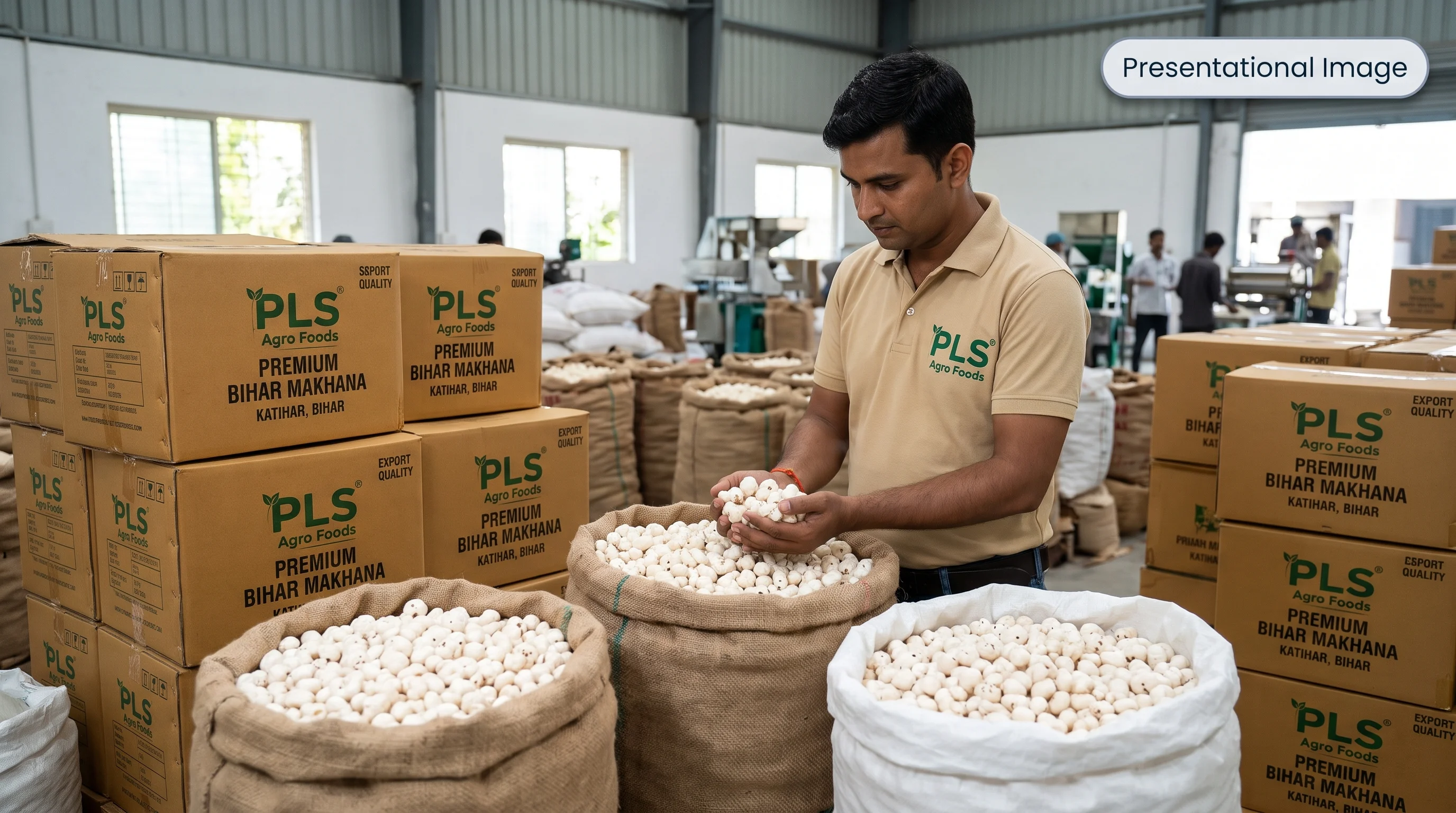
Bulk Importers: To preserve crunch during ocean freight, we utilize high-micron, nitrogen-flushed, vacuum-sealed bags packed inside heavy-duty corrugated cartons.
-
Private Label (OEM): For brands looking to skip domestic repacking, PLS Agro Foods offers end-to-end OEM services. We can process, flavor, and pack the Makhana directly into your brand's retail-ready stand-up pouches, ready for supermarket shelves upon arrival.
5. Why Source Directly from Katihar, Bihar? Bihar produces roughly 90% of the world's Fox Nuts, but Katihar's unique wetland ecosystem yields the finest crop. By partnering with a manufacturer at the source, buyers bypass multiple layers of domestic trading companies. This direct farm-to-port model guarantees lower FOB prices, fresher harvests, and transparent supply chain traceability.
Ready to secure your Makhana supply chain for 2026? Contact the PLS Agro Foods export division today for our latest FOB price list, sample requests, and container freight quotes.
Frequently Asked Questions
About The Author
Senior Editor at PLS Foods Journal. Bringing you in-depth analysis on the global spice trade, sustainable agriculture, and market trends.
View all articles